

Planning an international trip involves more than booking flights, choosing hotels, and packing your bags. Before leaving the United States, travelers should also check whether their destination has a travel warning, security alert, or other official safety advisory.
A travel warning can help travelers understand potential risks, including crime, civil unrest, terrorism, health emergencies, and natural disasters. Knowing where to find reliable information can help you make informed decisions, prepare for unexpected situations, and adjust your travel plans when necessary.
The most important step is to check official government guidance before departure and continue monitoring updates throughout your trip.
What Is a Travel Warning?
A travel warning is a general term people use for information about safety risks that could affect a trip. It may refer to a government travel advisory, an emergency alert, or a warning about a specific location or event.
For Americans traveling internationally, the U.S. Department of State publishes official travel advisories that explain potential risks in destinations around the world.
These advisories help travelers understand the nature of identified risks and decide what precautions may be appropriate.
A travel advisory does not necessarily mean that an entire country is unsafe. Risks can differ between cities, regions, and specific locations within the same country.
For example, a destination may have generally manageable travel conditions while certain areas face greater risks because of crime, severe weather, or political unrest.
Before making a decision, read the full advisory for your destination rather than relying only on a headline or social media post.
How to Check Current Travel Warnings
Checking official travel information before booking or departing can help you avoid surprises.
Follow these steps to review travel advisories for your destination.
1. Visit the Official U.S. Travel Advisory Website
Start with the U.S. Department of State’s travel advisory website. It provides country-specific information and explains the risks identified for each destination.
Look for your destination by country or area, then open its advisory page.
Read the advisory carefully, paying attention to the date, stated risk level, affected locations, and recommended precautions.
2. Review the Advisory Level
The United States uses four travel advisory levels. Each level describes a different degree of concern.
However, the level alone does not explain every risk. Read the details to understand which activities or locations may require additional caution.
3. Check the Specific Risks
Look for information about crime, terrorism, civil unrest, health concerns, natural disasters, and other destination-specific issues.
Not every destination faces every type of risk. Focus on the risks actually identified in the advisory for your planned destination.
4. Check for Recent Updates
Travel conditions can change after you book your trip.
Recheck the advisory before departure and monitor official updates while traveling. Pay particular attention to new alerts involving your destination, nearby regions, transportation, or planned activities.
5. Review Other Official Information
Depending on your destination, you may also need to review entry requirements, local laws, health guidance, weather alerts, and transportation updates.
Use official sources appropriate to each issue rather than assuming a travel advisory answers every travel-related question.
Understanding the Four U.S. Travel Advisory Levels
The U.S. Department of State uses four levels to communicate international travel risks.
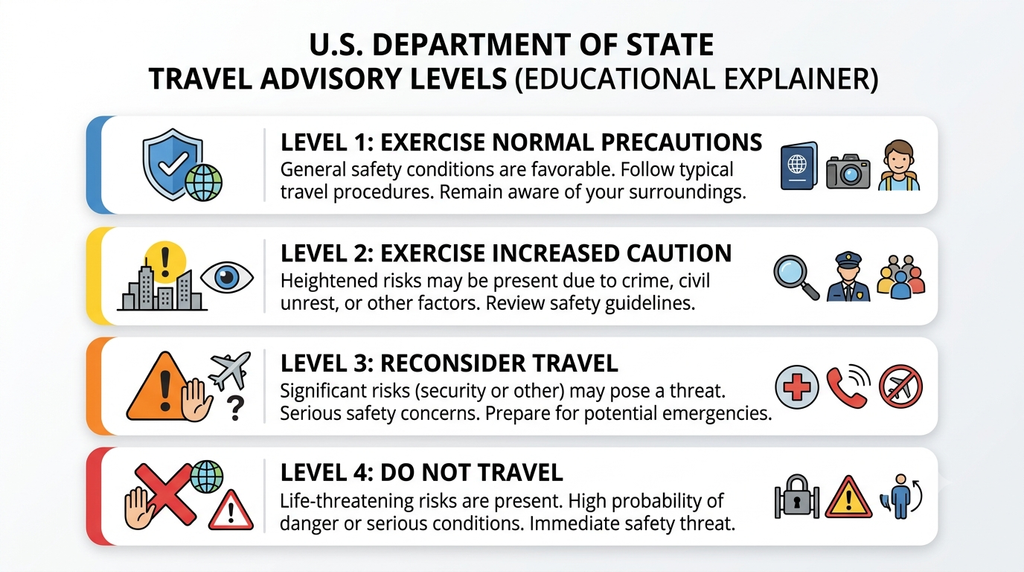
Level 1: Exercise Normal Precautions
Level 1 is the lowest advisory level.
Travelers should follow ordinary safety precautions and remain aware of their surroundings. This level does not mean that every activity or location is completely risk-free.
Before traveling, review local laws, transportation arrangements, and any specific advice provided for your destination.
Level 2: Exercise Increased Caution
Level 2 indicates that travelers should be aware of increased risks to safety or security.
The advisory explains the specific concerns and may recommend additional precautions.
Travelers should read those details carefully and consider how the identified risks could affect their itinerary.
Level 3: Reconsider Travel
Level 3 means travelers should reconsider travel because of serious safety or security risks.
Read the full advisory to understand the nature of the risks, which locations are affected, and whether alternative destinations or travel dates would be more appropriate.
If you have already booked your trip, review your options and consult your airline, accommodation provider, or travel insurer where relevant.
Level 4: Do Not Travel
Level 4 is the highest U.S. travel advisory level.
It indicates life-threatening risks, and the U.S. government may have very limited ability to assist citizens during an emergency.
Travelers should take this warning seriously and follow the official guidance provided for the destination.
If you are already in an affected location, consult the advisory and relevant U.S. embassy or consulate information for guidance on available assistance and safe departure options.
Important: Advisory levels can change. Always check the latest official information for your destination instead of relying on an old article or a previously saved screenshot.
What Can Trigger a Travel Warning?
Travel advisories can identify different types of risks. Understanding them can help you decide which information matters most for your trip.
Crime and Personal Security
Some destinations or regions may present increased risks of theft, robbery, kidnapping, or violent crime.
Travelers should review local safety guidance, protect their belongings, use reputable transportation, and understand which areas may require additional caution.
Terrorism and Security Threats
Official advisories may identify terrorism-related threats or other security concerns.
Review the guidance for affected locations, follow instructions from local authorities, and avoid areas where officials advise against travel.
Political Unrest and Civil Disturbances
Protests, demonstrations, strikes, and civil unrest can disrupt transportation and create safety concerns.
Monitor official updates, avoid demonstrations when advised, and maintain alternative routes or arrangements if your itinerary may be affected.
Health Emergencies
Disease outbreaks and other public health concerns may affect travel plans.
Check current health information from appropriate government and public health authorities. Review relevant entry requirements and seek professional medical advice when necessary.
Natural Disasters and Severe Weather
Hurricanes, floods, wildfires, earthquakes, and other natural hazards can affect transportation, accommodation, and personal safety.
Check official weather and emergency-management updates, particularly if traveling during a season when severe weather is possible.
How to Prepare Before Traveling Abroad

Checking a travel warning is only one part of preparing for an international trip.
Use this checklist before departure.
- Check your passport: Confirm that it meets your destination’s requirements and remains valid for the required period.
- Review entry requirements: Check visa rules, permitted activities, and other official entry conditions.
- Understand local laws: Research important local laws and customs that may affect your stay.
- Arrange appropriate travel insurance: Read the policy carefully and understand its exclusions, coverage limits, and emergency procedures.
- Save emergency information: Keep important contact details accessible even when your phone has no internet connection.
- Keep document copies: Store secure copies of your passport, insurance details, and important travel documents.
- Plan transportation: Identify reliable transportation options and alternatives in case of disruption.
- Monitor official updates: Check advisories and relevant local alerts before departure and throughout your trip.
- Share your itinerary: Consider sharing your travel plans and contact information with someone you trust.
- Prepare for disruptions: Understand how you would respond if a flight were canceled, a destination became inaccessible, or an emergency occurred.
Your preparation should reflect the actual risks identified for your destination rather than relying on a generic checklist alone.
What Should You Do If a Travel Warning Changes?
A new travel warning does not automatically mean that every trip must be canceled. The appropriate response depends on the advisory level, the specific risk, the affected location, and your circumstances.
If an advisory changes before departure, take the following steps:
- Open the latest official advisory and read the updated information.
- Identify whether the warning affects your destination, planned activities, or transportation routes.
- Check whether the government recommends reconsidering travel or avoiding the destination.
- Contact your airline, accommodation provider, or tour operator about available options.
- Review your travel insurance policy and any applicable cancellation conditions.
- Consider postponing, changing, or canceling your trip if the identified risks warrant it.
- Keep monitoring official information until your travel plans are resolved.
If you are already abroad, prioritize your immediate safety and follow instructions from local authorities. Contact the nearest U.S. embassy or consulate for relevant assistance information if needed.
Do not assume that an embassy can arrange transportation, guarantee evacuation, or provide every form of assistance in every situation.
How Can U.S. Citizens Receive Travel Alerts?
U.S. citizens traveling abroad can use the Smart Traveler Enrollment Program, commonly known as STEP.
STEP is a free service provided by the U.S. Department of State. It allows eligible travelers to register their trips and receive relevant information from the nearest U.S. embassy or consulate.
Depending on the situation, enrollment can help travelers receive updates about security conditions and emergencies. It can also help the U.S. embassy or consulate contact them when appropriate.
To get started, visit the official STEP information page and follow its current registration instructions.
Travelers should also keep their contact information updated and maintain other emergency communication options.
STEP is a useful information service, but enrollment does not eliminate travel risks or guarantee that assistance will always be available.
3. U.S. Department of State — Travel Advisory Levels
Common Mistakes to Avoid When Reading Travel Warnings
Relying on Old Information
A travel advisory published months ago may no longer reflect current conditions.
Check the latest official destination page and look for the date of the most recent update.
Treating Social Media Posts as Official Warnings
A viral post may contain outdated, incomplete, or misleading information.
Use social media as a possible lead, not as a substitute for official government guidance.
Assuming an Entire Country Has the Same Risk
Conditions can vary significantly between regions and cities.
Read the details to identify the locations and activities covered by the advisory.
Ignoring the Specific Risk Indicators
The advisory level is only part of the picture.
Read the explanation of the identified risks and the precautions recommended for travelers.
Assuming Travel Insurance Covers Every Emergency
Insurance policies differ. Some may exclude certain events, destinations, activities, or circumstances.
Read the policy wording and contact the insurer if you need clarification before traveling.
Waiting Until the Day of Departure
Checking advisories only after arriving at the airport leaves little time to adjust plans.
Review official information while planning, shortly before departure, and during your trip.
Frequently Asked Questions
Where can I check current travel warnings for Americans?
The U.S. Department of State publishes official travel advisories by destination. Its website explains advisory levels and identifies risks associated with individual countries and areas.
What is the difference between a travel warning and a travel advisory?
People often use these terms interchangeably. The U.S. Department of State currently uses the term Travel Advisory for its four-level system, while specific alerts may communicate developing situations or particular events.
Does a Level 1 travel advisory mean a country is completely safe?
No. Level 1 is the lowest advisory level, but no destination is entirely free of risk. Travelers should still follow ordinary precautions and review destination-specific guidance.
Should I cancel my trip if a travel advisory changes?
Not automatically. Read the latest advisory, assess the identified risks, and consider the affected locations and your circumstances. If officials advise against travel, take that guidance seriously and review your available options.
How often should I check travel warnings?
Check before booking when possible, again before departure, and regularly during your trip. Review updates promptly if a significant event affects your destination.
Can U.S. citizens receive travel alerts while abroad?
Yes. U.S. citizens can use the Smart Traveler Enrollment Program (STEP) to register trips and receive relevant information from U.S. embassies and consulates.
Are travel warnings and weather alerts the same?
No. Travel advisories may discuss natural disasters and other safety concerns, but weather alerts are often issued by specialized weather agencies and local authorities. Check the appropriate official source for the specific risk.
Final Thoughts
Checking a travel warning before an international trip is a practical way to make better-informed travel decisions.
Start with official U.S. Department of State travel advisories, understand the risks associated with your destination, and check for updates before departure and throughout your stay.
Prepare your documents, review insurance coverage, keep emergency contacts accessible, and follow local authorities’ instructions when conditions change.
A well-prepared traveler does not rely on headlines alone. Checking reliable information and responding to changing conditions can help you plan a safer, more informed trip.